
Caves in Gran Canaria: history and mystery
It is said that the silence inside a cave is not merely an absence of noise, but the latent echo of thousands of forgotten stories. In Gran Canaria, this ancient murmur comes to life in the artificial caves created by the island's first inhabitants: the Canarian aborigines. Their footprints, carved into volcanic rock, have defied centuries of erosion and social change, revealing to us the possibility of connecting with the most authentic part of insular history.
Origin and development of artificial caves in Gran Canaria
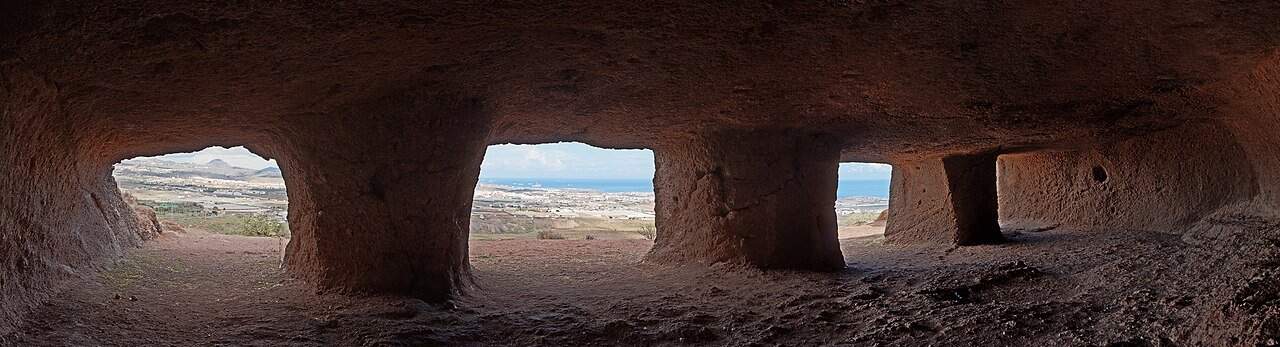
These are not just caves in the geographical sense of the term. What we find in the ravines and slopes of inland Gran Canaria are true works of ancestral architecture that, even today, evoke admiration and respect. These cavities, called cueltas, not only protected generations who never knew the clock or asphalt from the wind and sun, but they were also the stage for their beliefs, rituals, and daily life.
Imagining the past: aborigines and their motivations
The cueltas did not come about by chance, nor were they solely the result of a need for simple shelter. The pre-Hispanic Canarian people had to face a rugged environment, with steep ravines and a changing climate, where safety was a crucial concern. Yet, beyond survival, here we find desires for permanence and identity.
The reasons for excavating these artificial caves can be summarized in several points:
- Protection against natural elements: Deep and labyrinthine cueltas protected from sun, wind, and sudden rains.
- Shelter from potential conflicts: Choosing remote locations was not mere coincidence; it allowed them to control access and avoid adversaries or animals.
- Ritual spaces: Many interior chambers show signs of having been used for celebrations, offerings, or burials.
- Safe storage: Supplies, particularly grains and seeds, were stored safe from pests and humidity.
The effort and precision invested in their construction indicate a structured social organization and advanced knowledge for the time. Volcanic rock, although hard, was moldable for inhabitants specialized in working it with also makeshift tools, such as sticks and harder rocks.
Unique features: interior architecture of the cueltas
Upon entering a cuelta, the first thing that surprises is the transition from a narrow access to much wider chambers where the temperature and humidity remain constant, generating a special atmosphere among the rock formations. The dimensions, proportions, and layouts of the caves vary from one site to another, but they often share recognizable patterns:
| Element | Description |
|---|---|
| Entrance | Always discreet, of reduced height, camouflaged |
| Hallways | Narrow, with curves or changes of direction |
| Main chambers | More spacious, with high ceilings and smooth walls |
| Markers and symbols | Petroglyphs, marks, or carved niches |
| Material | Excavated in volcanic tuff or porous basalts |
The existence of marks, inscriptions, or small niches reveals multiple uses. These places were not mere dwellings but authentic private temples where everyday life and spirituality intertwined.
During recent excavations, archaeologists have identified remains of tools, pots, and organic remains, which helps to reconstruct the lifestyle patterns and beliefs of the primitive Canary society.
Location of the main areas of artificial caves
Gran Canaria is characterized by a rugged landscape that complicates access to many of these caves, which explains their excellent state of preservation, their appeal for tourism, and the aura of mystery that surrounds them.
The areas with the highest concentration of caves include:
- Guayadeque Ravine: One of the most important archaeological sites, with dozens of vertically arranged caves, many of which are still inhabited or restored for visits.
- Risco Caído: Since 2019 a UNESCO World Heritage site, an ancient sanctuary whose underground complexes include solar calendars and ritual rooms.
- La Cueva Pintada (Gáldar): Although of mixed origin (natural and artificial), it stands out for its geometric paintings and its history of continuous use.
- Barranco de Balos: A lesser-known enclave, but with a network of caves and hidden chambers on impossible slopes.
- Artenara: The highest municipality and with the largest number of excavated caves, many of which have been adapted as current residences.
This dispersion throughout the island demonstrates the importance of this type of architecture for all pre-Hispanic human settlements.
Life in the caves: much more than shelter
Imagining the routine within these spaces forces a reconsideration of many preconceived ideas about past cultures and their relationship with nature. Within each cave, the community found the necessary framework to develop with a certain autonomy. From here, they planned outings to gather, hunt wild goats, or cultivate patches of fertile land near the ravines.
The natives organized their living spaces according to specific functions: rooms for resting, others for food storage, and areas reserved for rituals or burials. Music, dance, and rock art were part of both celebrations and tributes to the ancestors.
Burials deserve special mention. Many caves transformed into true family pantheons, where bodies were deposited in a fetal position and accompanied by grave goods that included pots, idols, and other significant objects. This respect for the dead reinforces the perception that the cave, beyond its material function, served as a link between life and transcendence.
Technology and creativity in excavation
The work of creating these underground complexes required appropriate methods and tools, especially considering the hardness of the volcanic rock and the manual methods employed.
The tools were made from:
- Sharp hard stones (especially basalt)
- Fire-hardened sticks
- Animal horns or bones
The process was slow. It was carved little by little, removing pieces that could be taken out by hand or dragged with plant ropes. The accumulated experience was passed down from generation to generation, and only the most skilled members of the tribe held the delicate role of 'architects' and maintenance supervisors.
There were no written plans, but there were patterns transmitted orally and through observation. The result: infrastructures of surprising stability, many of them still habitable after more than 1,000 years.
Preservation and future of the caves of Gran Canaria
The conservation of these stony testimonies is now a source of pride and reflection. Various factors threaten their integrity: from erosion to undue tourist pressure or even archaeological plundering.
Numerous projects have been initiated to protect, study, and promote the historical value of the caves. The inclusion of sites like Risco Caído in the World Heritage list has provided a definitive boost for research, but above all for citizen awareness.
Visitors from all over the world arrive in Gran Canaria with a genuine interest in understanding the island's past. Each guided tour of restored caves contributes to the local economy as well as transforming the global perception of Canary heritage. The involvement of rural communities, true guardians of this legacy, is essential to ensure responsible conservation.
Myths, legends, and the magnetism of mystery
Stones often hold more than they show, and for centuries, the caves have been the subject of unusual legends. From supposed riches hidden by the ancient Canarians to tales of doors to other worlds and apparitions, the oral heritage surrounding these adventurous spaces is a fundamental part of their magnetism.
Popular voices claim that those who spend the night in a cave in Guayadeque can hear the lamentations of wandering souls or feel how time stands still inside. Others assert that there are secret tunnels connecting various caves, forming true labyrinths beneath the mountain.
Beyond the veracity of these stories, they create a unique atmosphere, inviting respect and humility before that great question: how much more remains to be discovered beneath the surface of Gran Canaria?
Looking toward a horizon of learning
The artificial caves of Gran Canaria challenge us and connect us through the centuries. Each visit, each excavation, each restoration contributes to unearthing more than just material vestiges. They offer us a great opportunity to better understand how ingenuity, creativity, and the desire to transcend combine to leave an indelible mark on the history of a proud island.
There is still much to investigate, interpret, and revalue, but what is already known invites us to look at these spaces with admiration and gratitude for the generations that, with tenacity and patience, made them possible.