
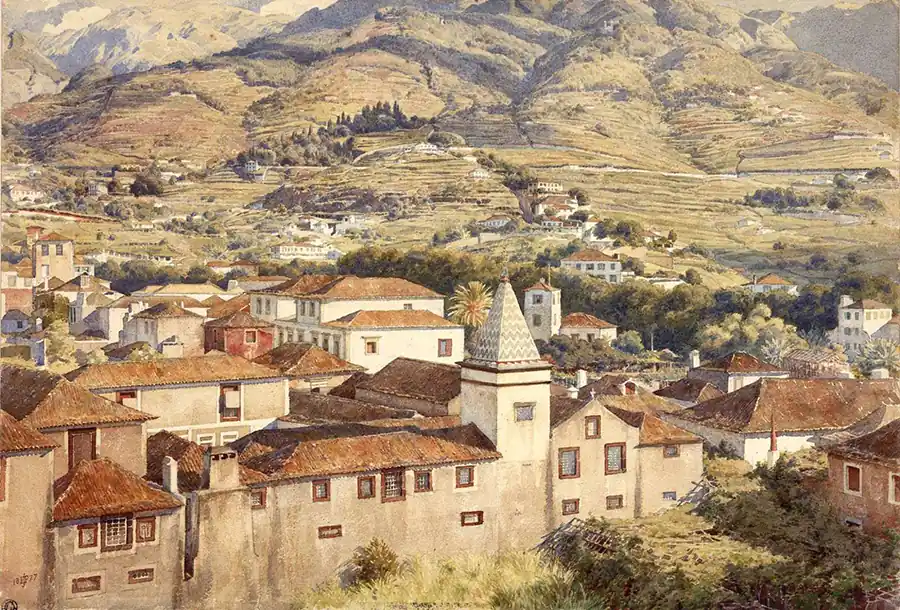
Some of the Canary Islands were legally Portuguese for 52 days.
When the Canaries were Portuguese

When were the Canary Islands legally Portuguese?
history of the Canary Islands
For 52 days in the 15th century, the Canary Islands were under Portuguese rule according to a papal decision. This fact is part of a historical dispute between Portugal and Castile over control of the archipelago.
The origin of the conflict
The history of who possessed the Canary Islands dates back to the 14th century. In 1344, the Pope granted the conquest of the islands to Luis de la Cerda, great-grandson of Alfonso X the Wise, as part of a fief. This generated tensions between Portugal and Castile, who viewed the islands as a strategic point for trade and territorial expansion.
In the mid-15th century, with the kingdoms seeking new markets and resources, the issue regained importance. The islands were key as a stopover on maritime routes to Africa and the southern continent.
The papal decision and the bulls
In September 1436, Pope Eugene IV issued the bull Romanus Pontifex , granting Portugal the right to conquer the Canary Islands. However, shortly after, in November of that same year, another bull was published, Romani Pontifici , which annulled the previous one and recognized Castile's rights over the archipelago.
This contradiction reflected the diplomatic pressures of both kingdoms and the lack of legal clarity regarding the Pope's power over non-Christian territories.
Arguments of Portugal and Castile
Portugal based its claim on the effective occupation of Gran Canaria and Tenerife, as well as on the geographical proximity to Africa, where it already had possessions. It also appealed to religious reasons: the need to evangelize the indigenous peoples.
On the other hand, Castile maintained that the islands had always been theirs by Visigoth inheritance. Furthermore, since 1402, it had a presence in Lanzarote, which reinforced its legal position.
Temporary resolution and implications
Although the bull Romani Pontifici favored Castile, the tension did not disappear. Only with the death of King Duarte of Portugal and the subsequent discovery of new lands south of Africa did the Canaries lose strategic prominence.
Finally, the Treaty of Alcáçovas (1479) and then the Treaty of Tordesillas (1494) definitively established the boundaries between the Spanish and Portuguese colonial empires, leaving the Canary Islands under Castilian sovereignty.