
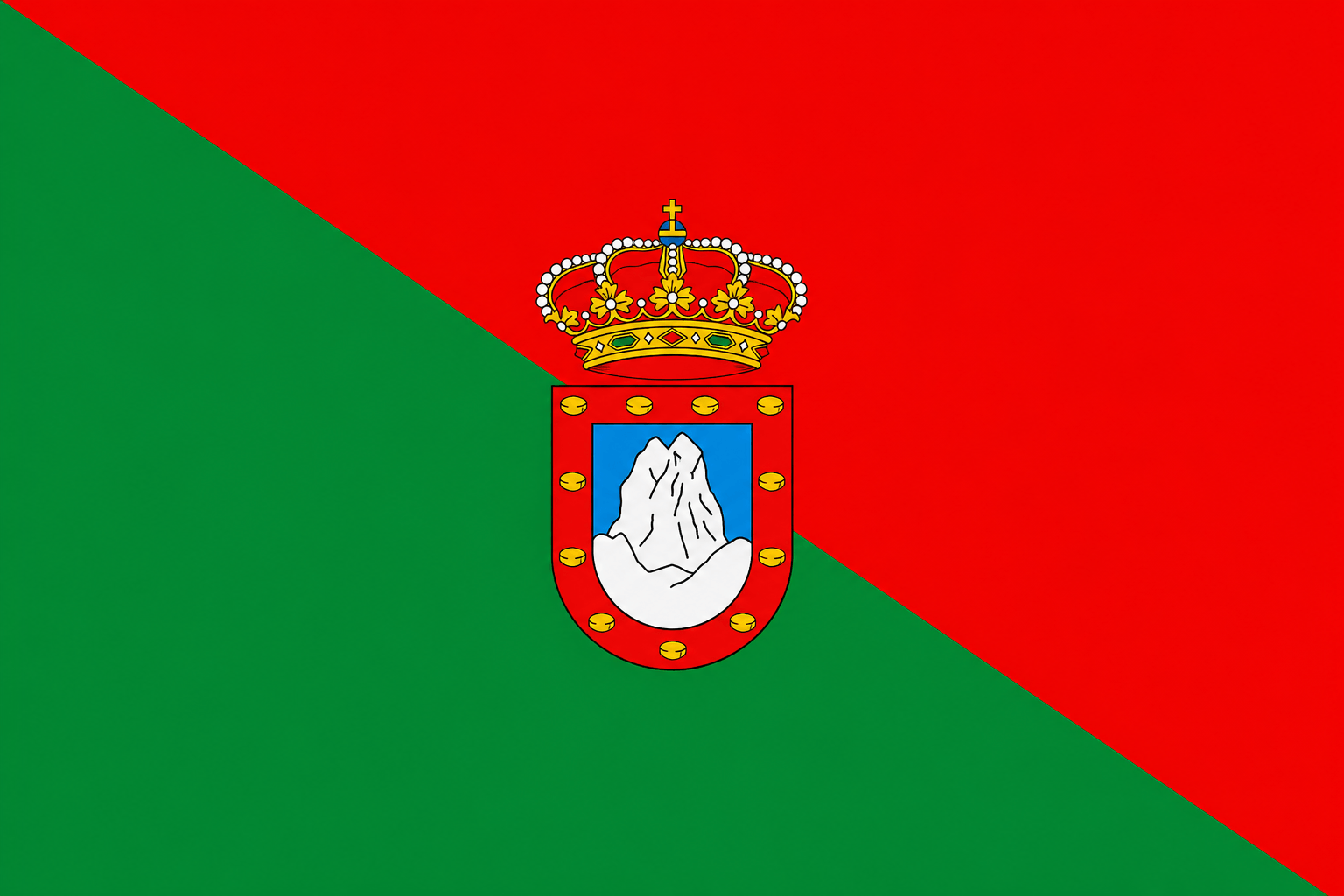
What to see in Vallehermoso, La Gomera
Roque Cano and Los Órganos
Vallehermoso La Gomera, the largest municipality on the island between ravines and laurisilva
Vallehermoso is the largest municipality in La Gomera, with more than 109 square kilometers extending from north to south covering three distinct coasts. Its territory includes a third of the Garajonay National Park, the largest juniper forests of Canary Islands, the spectacular Natural Monument of Los Órganos visible only from the sea, and the Roque Cano, the ancient volcanic chimney that watches over the valley from its 650 meters in height. In addition, its hamlets preserve artisan traditions that date back to the island's aborigines. You can check the live cameras of La Gomera to see the weather on the island before visiting.
The historic center and Roque Cano
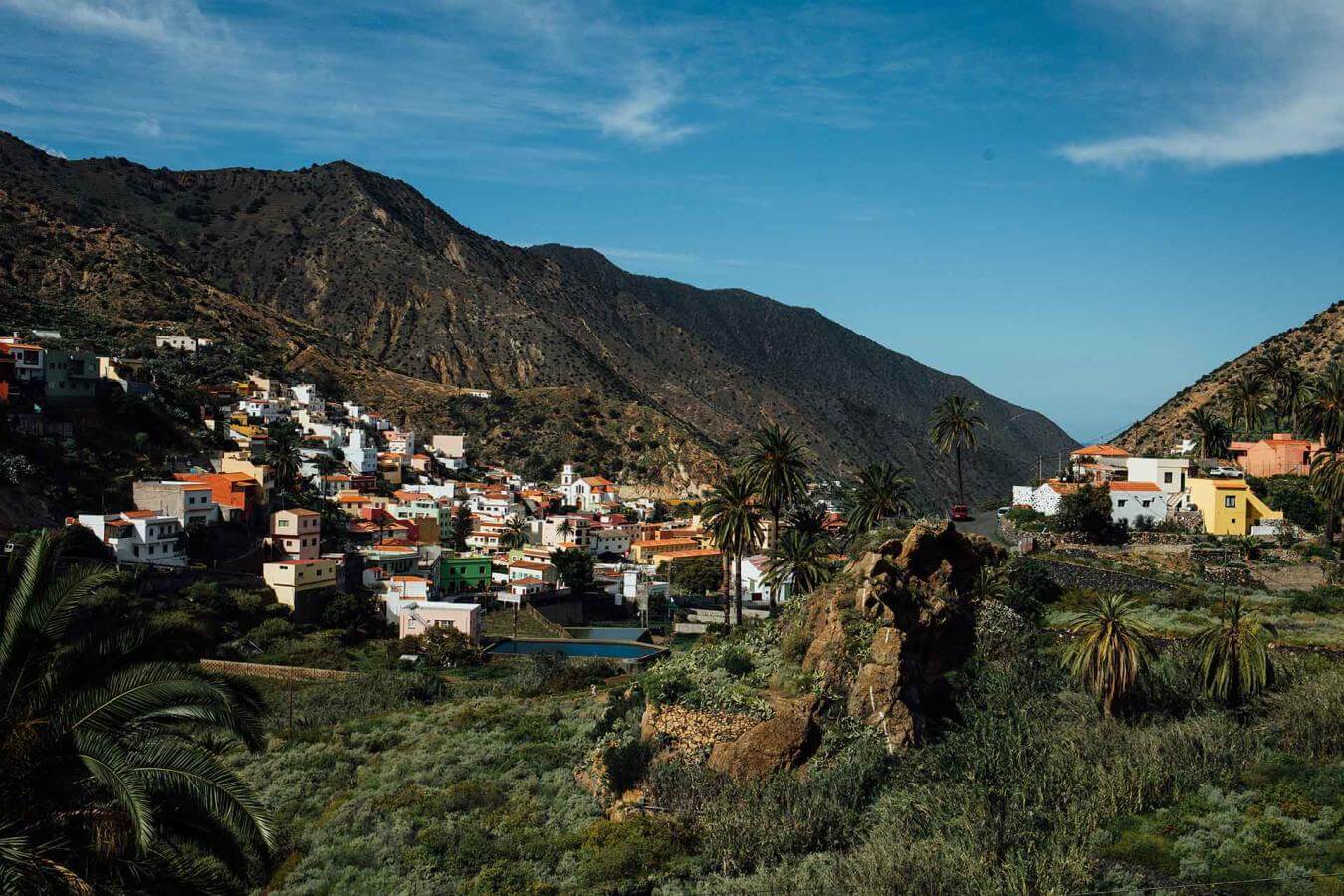
The town of Vallehermoso are organized around the Constitution Square, a small square with palm trees where the Town Hall displays its wooden Canary balcony. From there, the streets of the neighborhoods of Triana and Vegueta — names taken from the homonymous neighborhoods of Las Palmas de Gran Canaria — have white-walled houses and noble woods that maintain the image of a village that lives unaware of mass tourism.
The visual reference of the entire municipality is the Roque Cano, an ancient volcanic chimney of 650 meters that dominates the valley landscape with an unmistakable silhouette. It was declared Natural Monument and from the village, paths lead to its base among cultivated terraces and native vegetation. The Presa de la Encantadora, at the foot of the Roque, is another point of interest in the area: its calm waters reflect the rock and provide habitat for carp and perch, as well as offer one of the most unique views of the northern part of the island.
Los Órganos: the natural monument that can only be seen from the sea
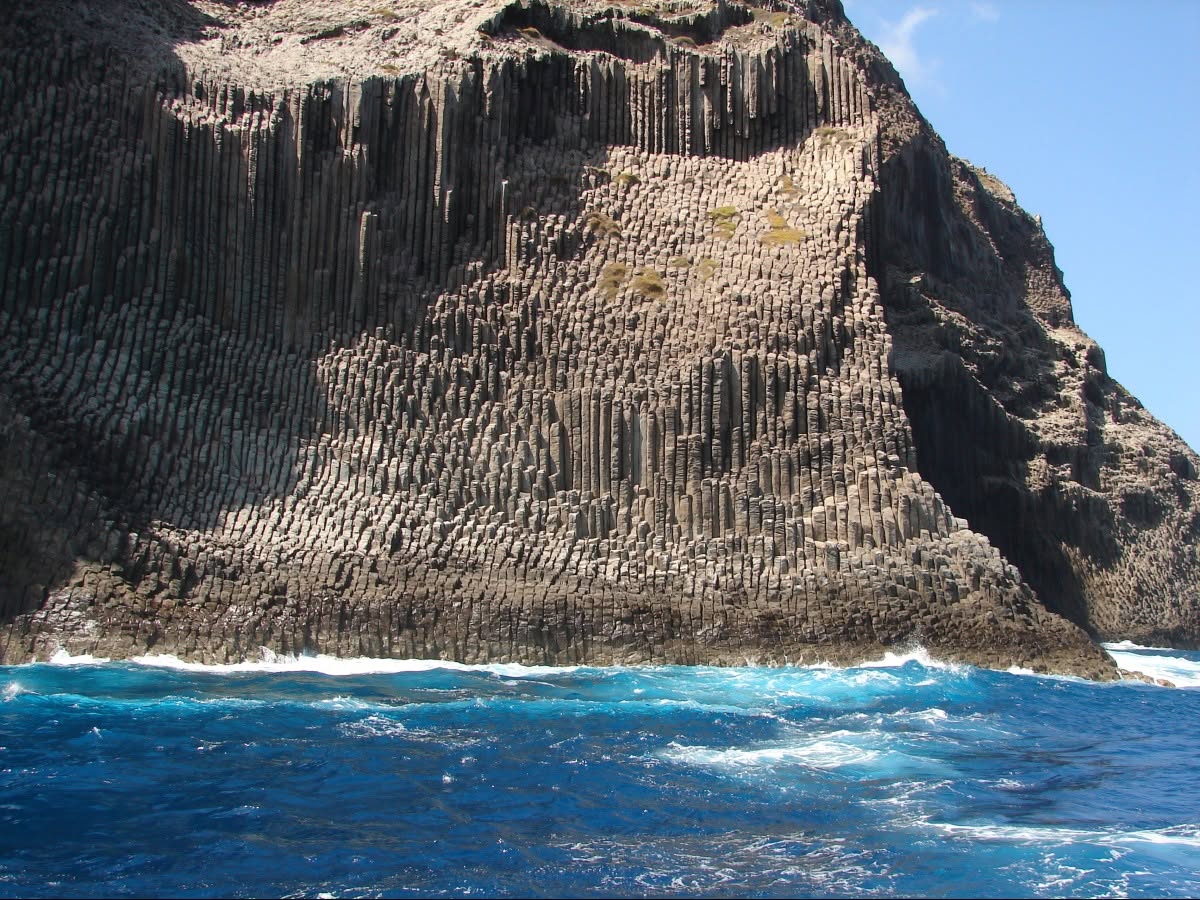
The Natural Monument of Los Órganos is one of the most photographed places in La Gomera and is only visible from the ocean. Its basalt rock columns — formed by the slow cooling of volcanic lava — resemble the pipes of a giant organ that emerges directly from the sea, with heights exceeding 80 meters. The visual effect is extraordinary, especially with the light of sunset.
To see it, you must hire a boat tour that departs from Valle Gran Rey or Playa de Santiago, always subject to sea conditions. For this reason, it is advisable to book in advance and ask if sea conditions allow access to the area. There is no other way to get there: the cliffs make land access impossible.
Garajonay and La Laguna Grande
The municipality of Vallehermoso houses some 1,300 hectares of the Garajonay National Park, almost a third of the park. Inside is the recreational area of La Laguna Grande, the most frequented resting point of the park: with water, barbecues, a children's area, restrooms, and a restaurant, it is a regular stop for both families and hikers. From here several marked trails lead into the park.
The Alto de Garajonay, with its 1,487 meters the highest peak of La Gomera, also partly belongs to the municipality. Likewise, the Fortaleza de Chipude — a volcanic plateau over 1,200 meters that the aborigines used as a place of worship — is part of the natural protected heritage of Vallehermoso and can be accessed on foot from the hamlet of Chipude.
Chipude and El Cercado: living tradition
Chipude is one of the most well-known hamlets in the municipality and holds two of its cultural treasures. The Iglesia de Nuestra Señora de la Candelaria, from the 16th century, is one of the oldest in the entire Canary archipelago. Its festivities in honor of the Virgin of Candelaria are among the most popular celebrations in La Gomera. A few minutes from Chipude, the hamlet of El Cercado is the last living stronghold of the pre-Columbian pottery of the island. Its artisans work with clay using the same techniques that the Guanche aborigines used, without a wheel and shaping by hand household and decorative pieces. The visit is free, and some potters work in view of the visitor.
Alojera and palm honey
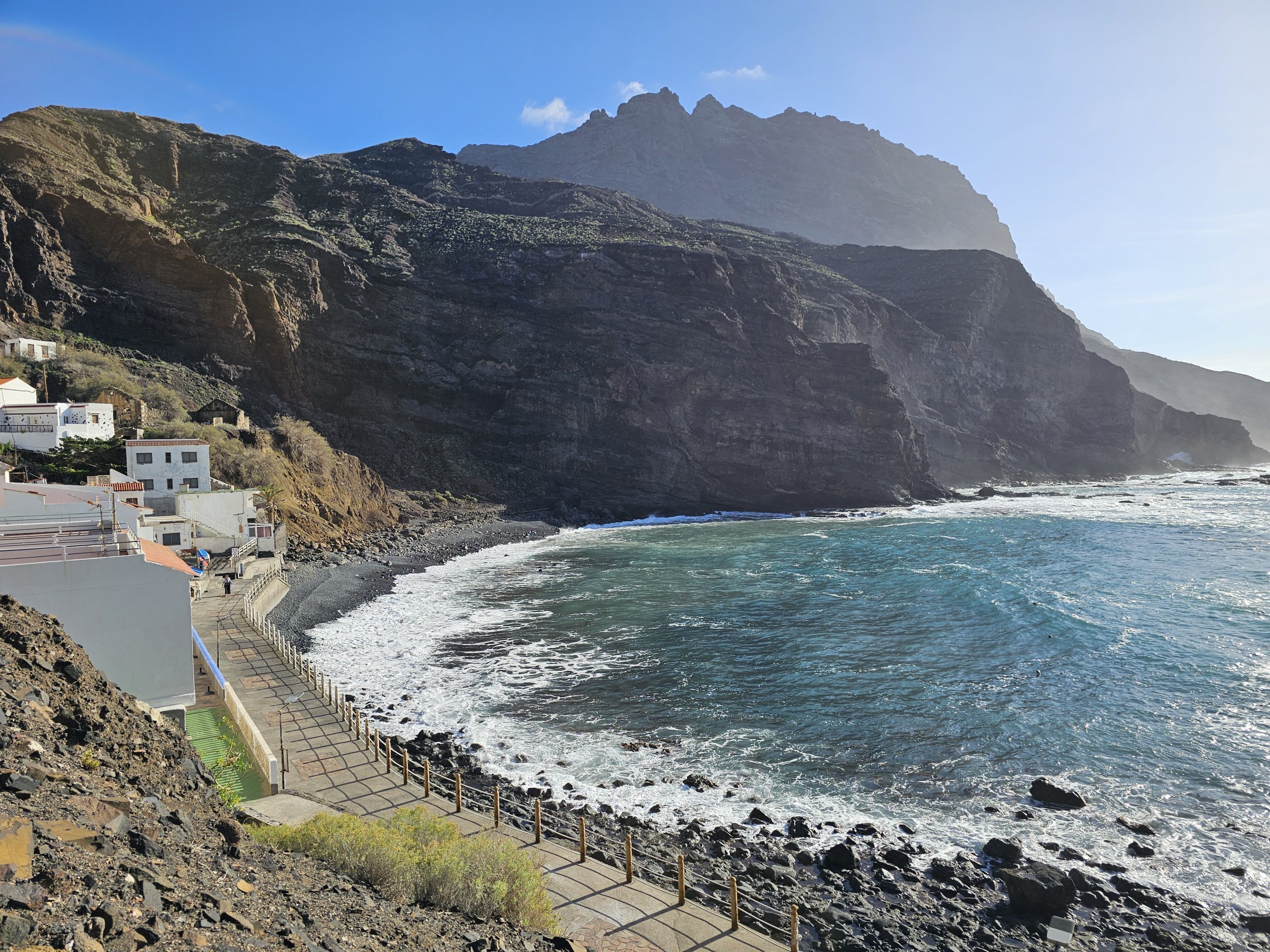
The hamlet of Alojera, on the northwest coast of the municipality, is the main producer of palm honey from La Gomera. Palm honey is extracted from the sap of the Canary palm through an artisanal process that dates back to ancient times: the palm workers climb the trees, cut the fronds, and collect the sap — called guarapo — which is then boiled for hours until it reduces to a dark and sweet syrup with a unique flavor. In addition, Alojera it has a beach that is difficult to access but very beautiful, with black sand, moderate waves, and a surrounding of cliffs that makes it one of the wildest beaches in the north of the island.
Gastronomy in Vallehermoso
The cuisine of Vallehermoso is the traditional gomera: almagrote, gofio escaldado, vegetable stews, goat cheeses, grilled meats, and fresh Atlantic fish. The palm honey is the most singular local product and appears in desserts, cheeses, and as an accompaniment to gofio. The municipality also has more than 80 active artisans who work with palm, looms, pottery, and wood, with direct sales in their workshops. On the other hand, the local wine — produced in irrigated vineyards in the midlands of the municipality — accompanies any table with a very own character of La Gomera.
How to get to Vallehermoso
Vallehermoso is in the north of La Gomera, about 30 kilometers from San Sebastián de La Gomera via the GM-1 road (approximately 45-50 minutes by car). The road is mountainous and has many curves, typical of the island. By public transport, the line 2 bus connects Vallehermoso with San Sebastián passing through Hermigua and Agulo, with several daily departures from Monday to Saturday. To reach La Gomera from Tenerife, the ferry leaves from the port of Los Cristianos to San Sebastián de La Gomera. Also check the live cameras of La Gomera to help you navigate the island.
Frequently asked questions about Vallehermoso La Gomera
What is Roque Cano?
It is an ancient volcanic chimney of 650 meters in height that dominates the landscape of the Vallehermoso valley VallehermosoIt was declared a Natural Monument and is the most recognizable geological symbol of northern La Gomera. From the village, paths lead to its base.
How to see the Natural Monument of Los Órganos?
It is only visible from the sea. Its basalt rock columns over 80 meters emerge directly from the ocean and can only be seen by hiring a boat tour from Valle Gran Rey or Playa de Santiago. Access depends on the state of the sea, so it is advisable to book in advance.
What is the pottery from El Cercado?
It is a pre-Columbian artisanal tradition that the potters of the hamlet of El Cercado keep alive using the same techniques that the Guanche aborigines used: without a wheel, molding clay by hand. The visit is free, and some artisans work in view of the public. It is one of the oldest artisan traditions in Canary Islands.
What is La Gomera's palm honey?
It is a unique artisanal product from La Gomera, made from the sap of the Canary palm. The palm worker climbs the tree, cuts the fronds, and collects the guarapo, which is then boiled for hours until it turns into a dark and sweet syrup. Alojera, in the municipality of Vallehermoso, it is the main producing area of the island.
What's in La Laguna Grande?
It is the most important recreational area of the Garajonay National Park, within the municipality of Vallehermoso. It has water, barbecues, a children's area, restrooms, and a restaurant. From there, marked routes lead into the park and to the Alto de Garajonay, the highest point of the island at 1,487 meters.
How to get to Vallehermoso from San Sebastián de La Gomera?
It is about 30 kilometers on the GM-1 road, approximately 45-50 minutes by car. The road has many curves and is narrow in some sections. By bus, the line 2 connects San Sebastián with Vallehermoso passing through Hermigua and Agulo, with several daily departures from Monday to Saturday.