
What to see in Hermigua, La Gomera
Green valley, banana plantations and natural pools
Hermigua La Gomera, the greenest valley in the north of the island
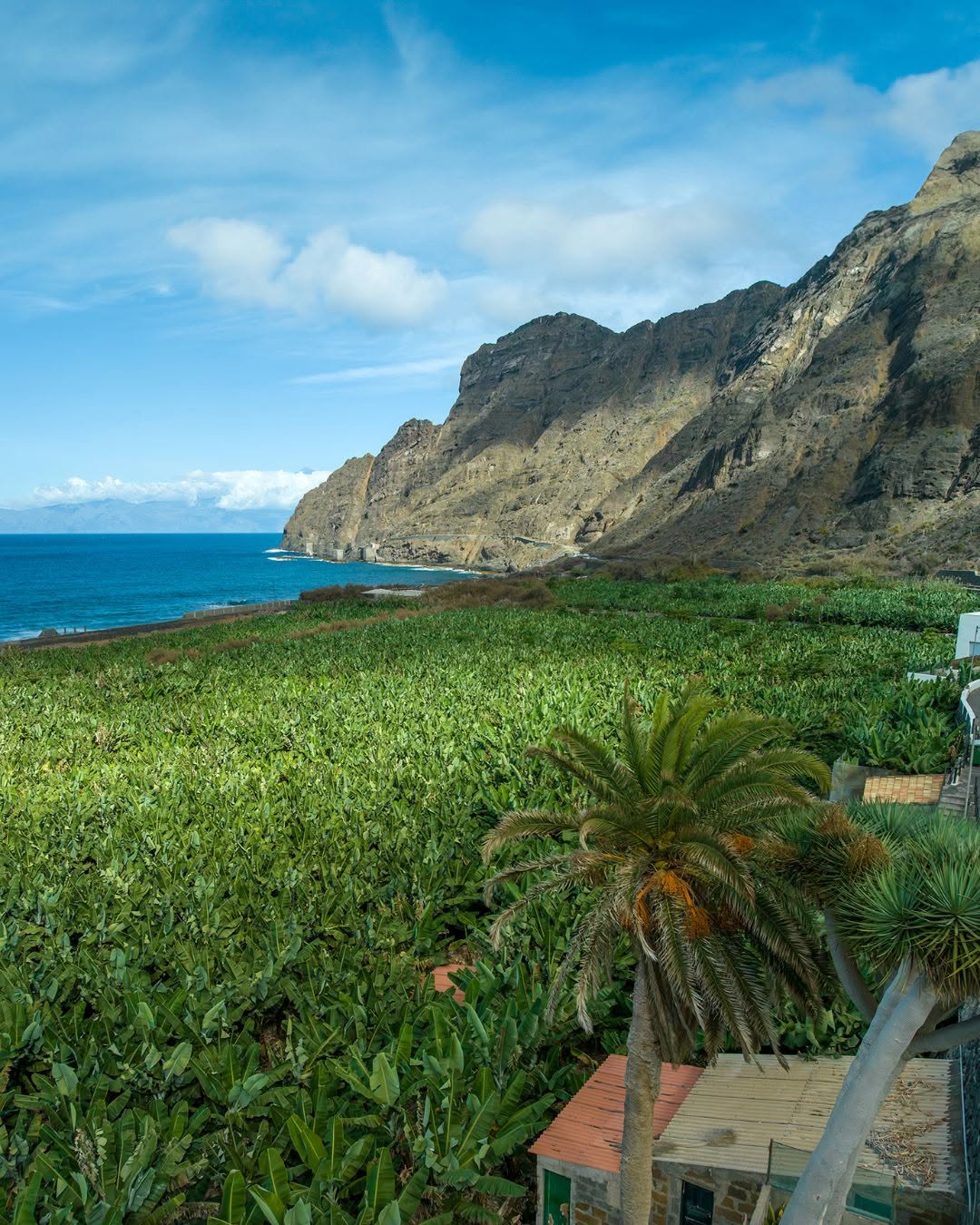
Hermigua is the northernmost municipality in La Gomera and one of the most singular in the archipelago. Its territory descends from the peaks of the Garajonay National Park down to a coastline of cliffs and black-sand beaches, passing through a fertile valley carpeted with banana plantations that surprises you as soon as you enter it from the GM-1 road. In addition, in the early 20th century, English, German and Belgian meteorologists declared it the place with the best climate in the world, and the sign at the municipality's entrance still proudly recalls it. You can check the live cameras of La Gomera to see the weather on the island before visiting.
The Convento de Santo Domingo and the historic centre
The origins of Hermigua go back to the 16th century, when the first settlement — the Valle Alto — grew around a hermitage dedicated to San Pedro. Dominican friars arrived later and transformed the hermitage into the Convento de Santo Domingo, which for centuries was the valley's cultural, educational and religious centre. Today it is the municipality's most important historic building and the starting point for understanding Hermigua's development.
The second settlement, the Valle Bajo, took shape when in 1650 the Iglesia de Nuestra Señora de la Encarnaciónwas built, the municipality's patron saint. The temple combines Neo-Gothic and Neo-Byzantine styles, and its single bell tower dominates the façade from the main square. Between the two districts — the Valle Alto and the Valle Bajo — are scattered traditional houses with white walls and fine woodwork that have given Hermigua its image as a well-preserved village wedged between ravines.
The Pescante and the natural pool
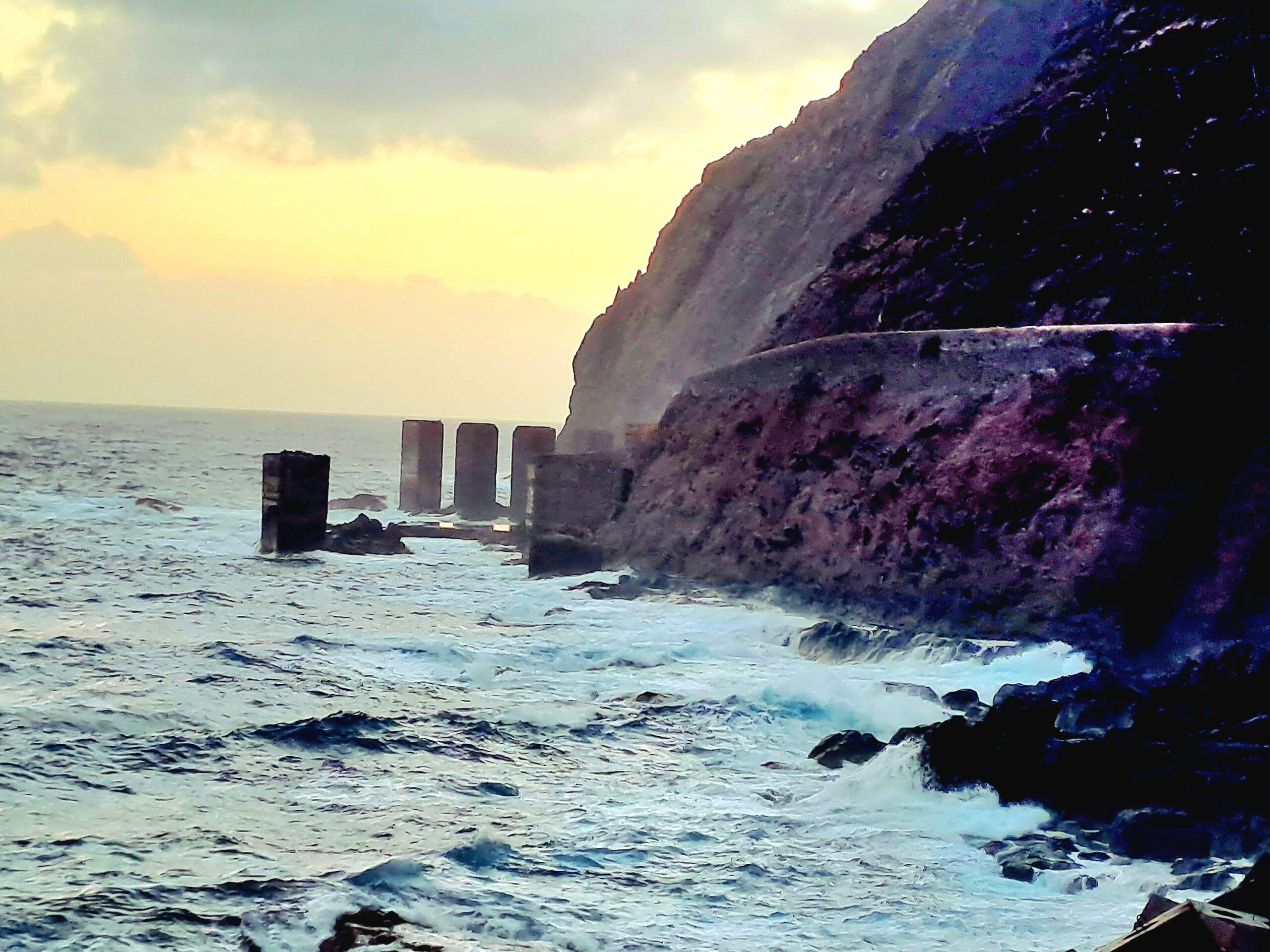
The Pescante de Hermigua is one of the most characteristic sights in all of La GomeraBuilt in the early 20th century in the bay of Santa Catalina, it was the municipality's only means of loading and unloading before island roads existed. Its four large concrete pillars extended into the sea, and an iron arm with a steam engine raised and lowered people, goods and animals to ships anchored in the bay. The first pescante was built in 1907 and a larger second one was built shortly after.
It fell out of use in the 1950s, but its pillars still stand and today form a natural pool much appreciated on calm days. The pools between the rock and the concrete hold seawater and offer one of the most singular swims in La Gomera, with Teide visible in the background on clear days. The complex is recognised as one of the jewels of industrial architecture in Canary Islands.
The beaches: La Caleta and Santa Catalina
The Playa de La Caleta is the municipality's best-loved beach and one of the best in the north of La Gomera. A cove of black sand about 200 metres long, sheltered from the swell and the northern currents, with calm waters and a cliff-lined setting that make it a quiet spot of great beauty. Thanks to these conditions, it's perfect for swimming year-round.
The Playa de Santa Catalina, on the other hand, has a completely different character: almost a kilometre long with constant swell that makes it ideal for surfing and bodyboarding. Because of that same swell, however, it is not suitable for swimming. Next to it stand the pillars of the Pescante, making the area one of the most photogenic spots on the island.
The El Cedro forest and Garajonay
The hamlet of El Cedro, in the municipality's peaks, is the most natural access to the Garajonay National Park from the north. Nestled in a small valley surrounded by laurisilva dense laurisilva, a clear-water stream runs through it, and it is crossed by one of the island's most highly rated hiking routes. The trail from El Convento in Hermigua up to El Cedro runs along the ravine among vegetation and small waterfalls, in a humid forest setting that seems to belong to another continent. From
From El Cedro El Cedro routes can be combined into the interior of the park, reaching the Aceviños, at the Alto de Garajonay and to the lagoon of La Laguna Grande. It is, therefore, one of the most recommended access points to the park for those staying in the north of the island.
The Ethnographic Museum and the Roques de Hermigua
The The Parque Etnográfico de La Gomera, located at the entrance to the municipality, is one of the island's best museums for understanding Gomeran traditions and culture. Its rooms cover the history of La Gomera from the first settlers, with ceramic pieces, furniture and craftwork, and it devotes special attention to the Silbo Gomero, the whistled language the Gomerans developed to communicate across the ravines. It also includes a working old gofio mill. The visit can be done with an audio guide at your own pace.
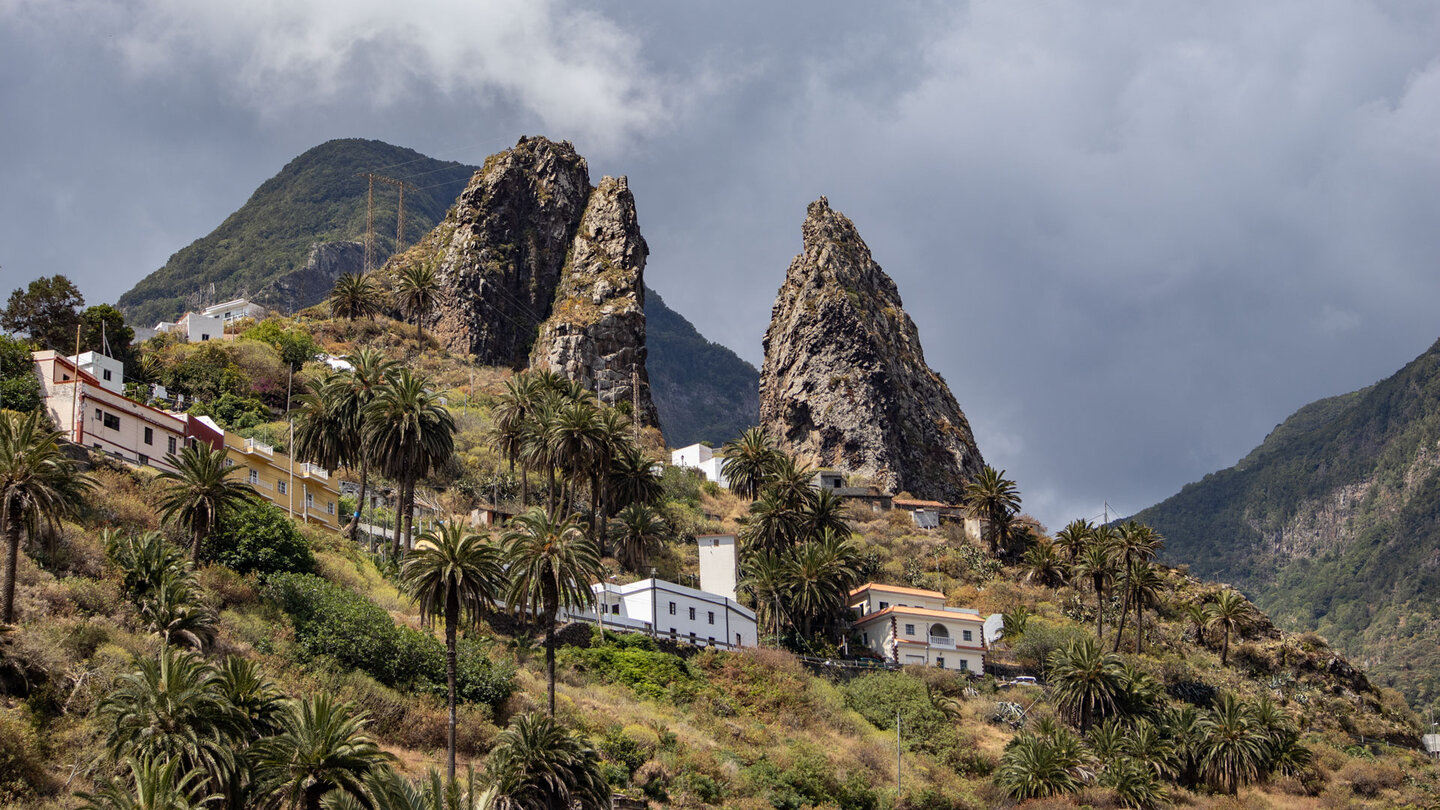
The Roques de Pedro y Petra are two volcanic formations that dominate the valley's landscape and are the municipality's most recognisable visual symbol. Visible from various points along the road, they take their name from a local legend about two shepherds who, according to tradition, were turned to stone by the wrath of the gods.
Gastronomy in Hermigua
Restaurants in Hermigua serve honest Gomeran cuisine made from local produce. The almagrote — a spread of cured cheese with hot paprika and garlic — is the essential starter. The gofio escaldado, watercress stews, meat with potatoes and fresh fish from the north are the usual dishes. Meanwhile, Los Telares is the municipality's best-known restaurant, located in a historic mansion where local textile craftwork is also made and sold. La Tasca Telémaco and the restaurant Las Chácaras round out the valley's gastronomic offering.
How to get to Hermigua
Hermigua is in the north of La Gomera, about 12 kilometres from San Sebastián de La Gomera via the GM-1 road (approximately 20-25 minutes by car). The road is a narrow mountain one, typical of the island, so it's recommended to drive calmly. By public transport, the line 2 bus connects Hermigua with San Sebastián de La Gomera with five daily departures Monday to Saturday and three on Sundays. To get to La Gomera from Tenerife, the ferry leaves from the port of Los Cristianos. Also check the live cameras of La Gomera to help you navigate the island.
Frequently asked questions about Hermigua La Gomera
What is the Pescante de Hermigua?
It is an old industrial jetty built in the early 20th century in the bay of Santa Catalina. Its four concrete pillars extended into the sea and were used to load and unload goods via an iron arm with a steam engine. Today it is in ruins, but its pillars form a natural pool very popular. It is one of the jewels of industrial architecture in La Gomera.
What is the best beach in Hermigua for swimming?
The Playa de La Caleta is the best option for swimming: a cove of black sand about 200 metres long, sheltered from the swell and the northern currents, with calm waters year-round. The Playa de Santa Catalina has more swell and is better for surfing, but is not suitable for swimming.
How do you get to the El Cedro forest from Hermigua?
The most popular trail sets off from the Convento de Santo Domingo in Hermigua and climbs the ravine up to the hamlet of El Cedro, through laurisilva and a clear-water stream. The route is of medium difficulty and takes approximately two hours going up. From El Cedro you can continue into the interior of the Garajonay National Park.
What is the Parque Etnográfico de La Gomera?
It is a museum located at the entrance to Hermigua with exhibits on the island's history and traditions, including the Silbo Gomero, indigenous ceramics and a working old gofio mill. The visit can be done with an audio guide at your own pace.
Why is Hermigua known as the place with the best climate in the world?
In the early 20th century, meteorologists from several European countries studied the climate of Hermigua and concluded that its mild year-round temperatures — with lows that rarely drop below 18°C in winter and highs that rarely exceed 27°C in summer — made it one of the mildest climates on the planet. The sign at the municipality's entrance still recalls this recognition.
How do you get to Hermigua from San Sebastián de La Gomera?
It's about 12 kilometres via the GM-1 road, approximately 20-25 minutes by car. By bus, the line 2 connects San Sebastián with Hermigua with five daily departures Monday to Saturday and three on Sundays. The road is narrow and mountainous, typical of La Gomera, so it's best to drive without rushing.