
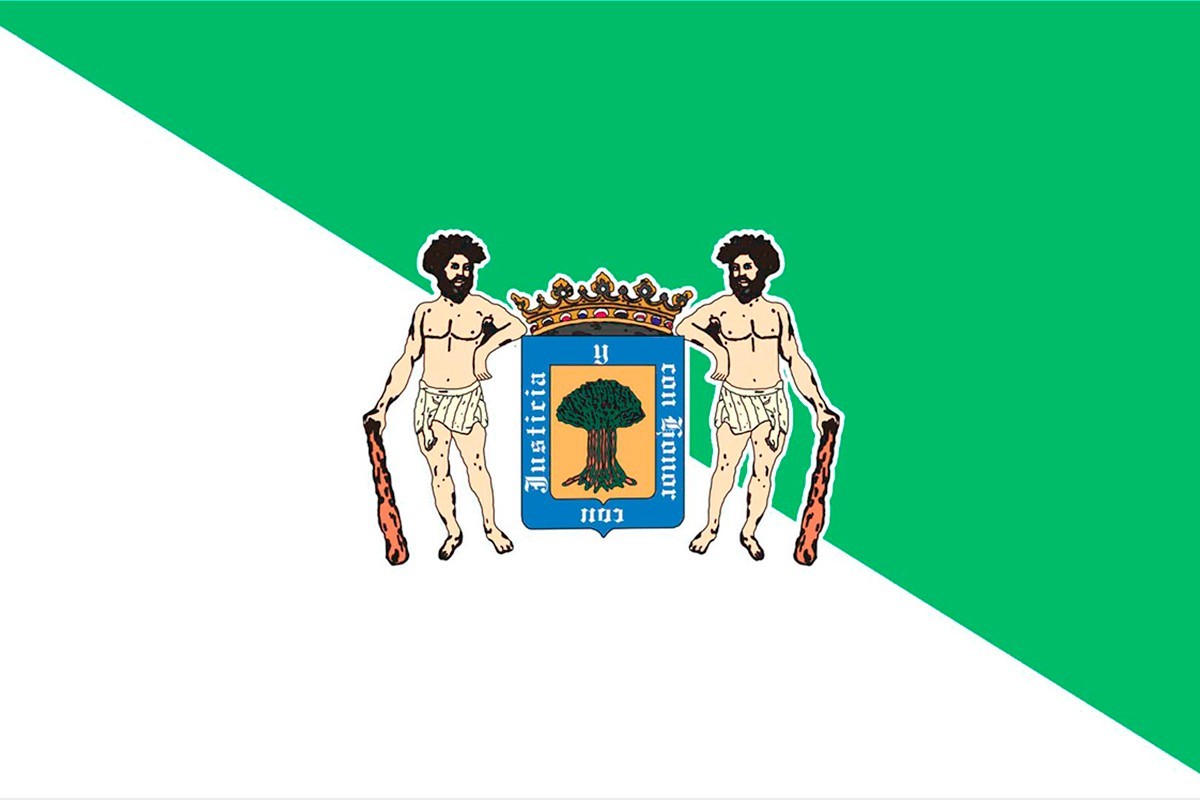
What to See in Valsequillo, Gran Canaria
Almond trees in bloom and rural landscape
Valsequillo Gran Canaria, the municipality of ravines and the blue tajinaste
Valsequillo is one of the most unknown and most surprising municipalities in the mid-altitude areas of Gran Canaria. Sitting between 300 and 1,800 metres above sea level, in the eastern basin of the island, it holds some of the most valuable natural landscapes in Gran Canaria: the Barranco de los Cernícalos with the island's biggest waterfalls, the Caldera de Tenteniguada with the largest population of tajinaste azul of Canary Islands, and the Roques de Tenteniguada which crown the horizon from almost anywhere in the municipality. The leading producer of strawberries of Canary Islands and a benchmark for mid-altitude craftwork, it deserves far more attention than it usually gets. Check the webcams of Gran Canaria and check the weather before visiting.
The Barranco de los Cernícalos
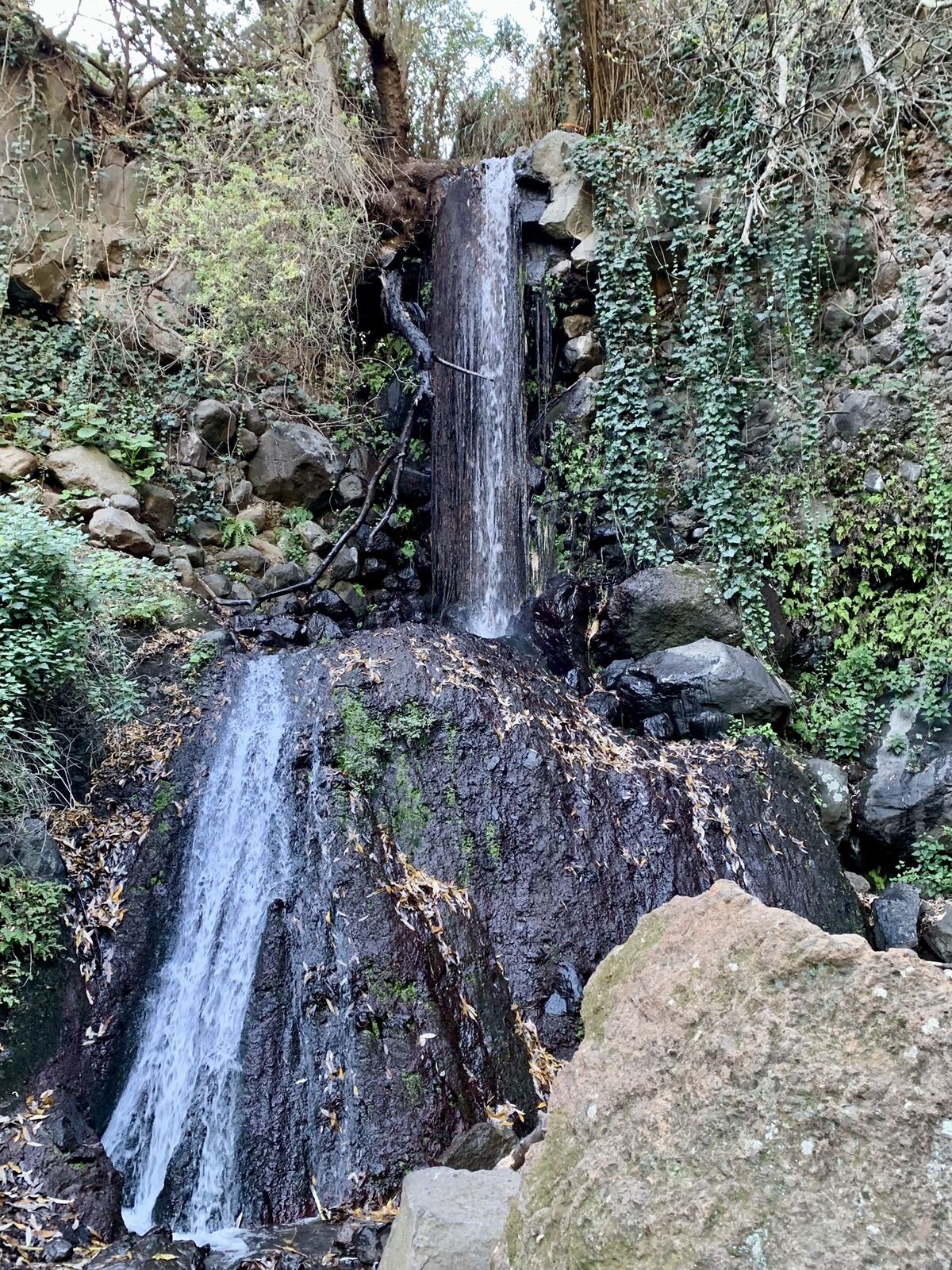
The Barranco de los Cernícalos is the great natural attraction of Valsequillo and one of the most popular hiking routes in eastern Gran CanariaIt shares territory with the neighbouring municipality of Telde and is home to one of the island's best wild-olive forests alongside a dense willow grove of great botanical value. Its streambed carries water all year round, creating lush vegetation very rare in the east of the island.
The main trail runs for about 7 kilometres with low difficulty and reaches the most impressive waterfalls in Gran Canaria. It is therefore visited year-round by families and hikers of all levels. Along the streambed, pre-Hispanic settlements are preserved in the Los Llanetes and Tecén areas, along with several historic gofio mills.
Tenteniguada and the Caldera de los Marteles
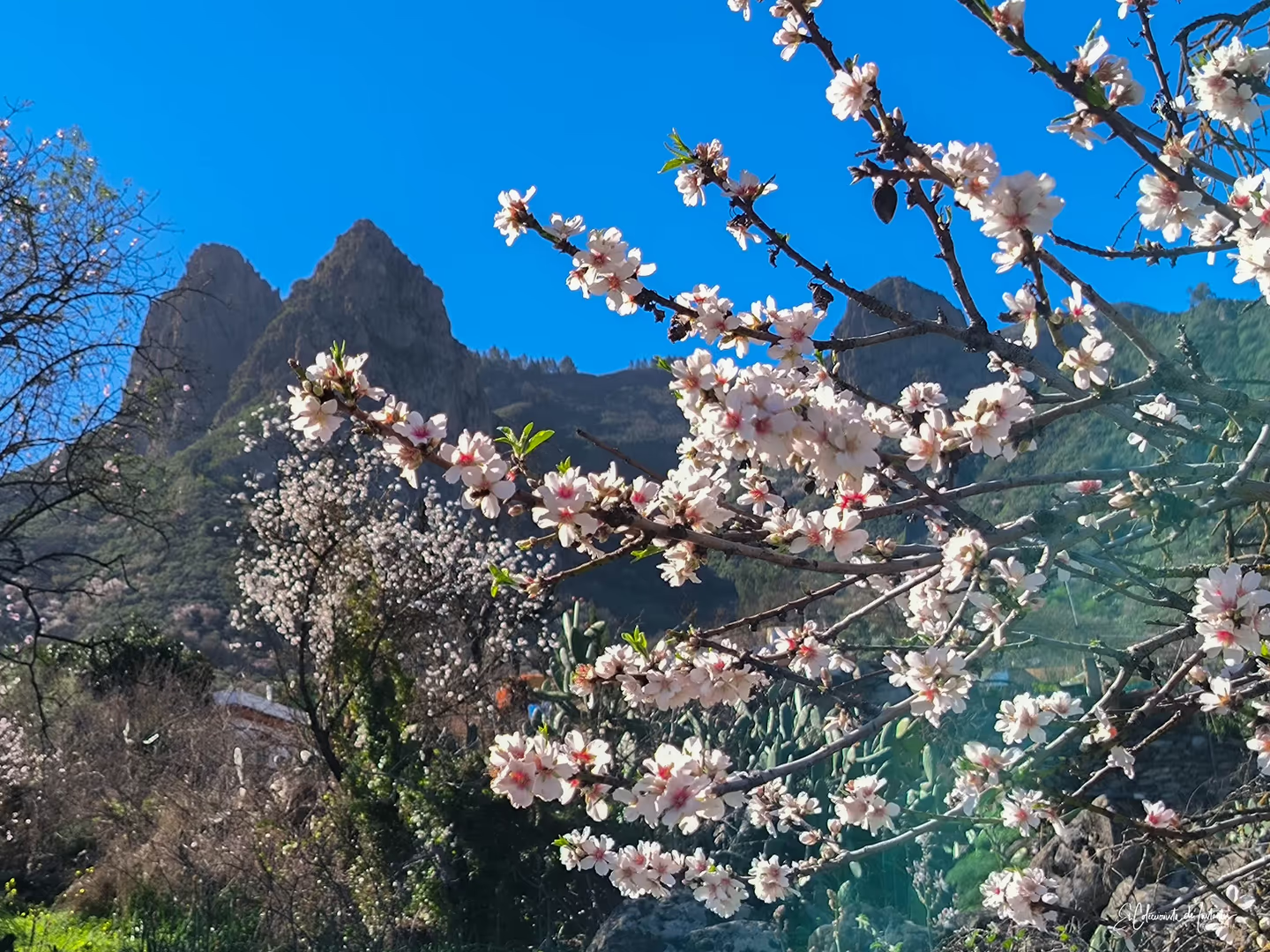
The Rincón de Tenteniguada is one of the municipality's most highly valued landscapes. Its palm groves, wild olives and almond trees create a fertile valley setting surrounded by phonolite rock walls. In January and February, when the almond trees bloom, the valley becomes one of the most photogenic spots in Gran CanariaThe Fiesta del Almendro en Flor is, for this reason, one of the most crowded in the island's interior.
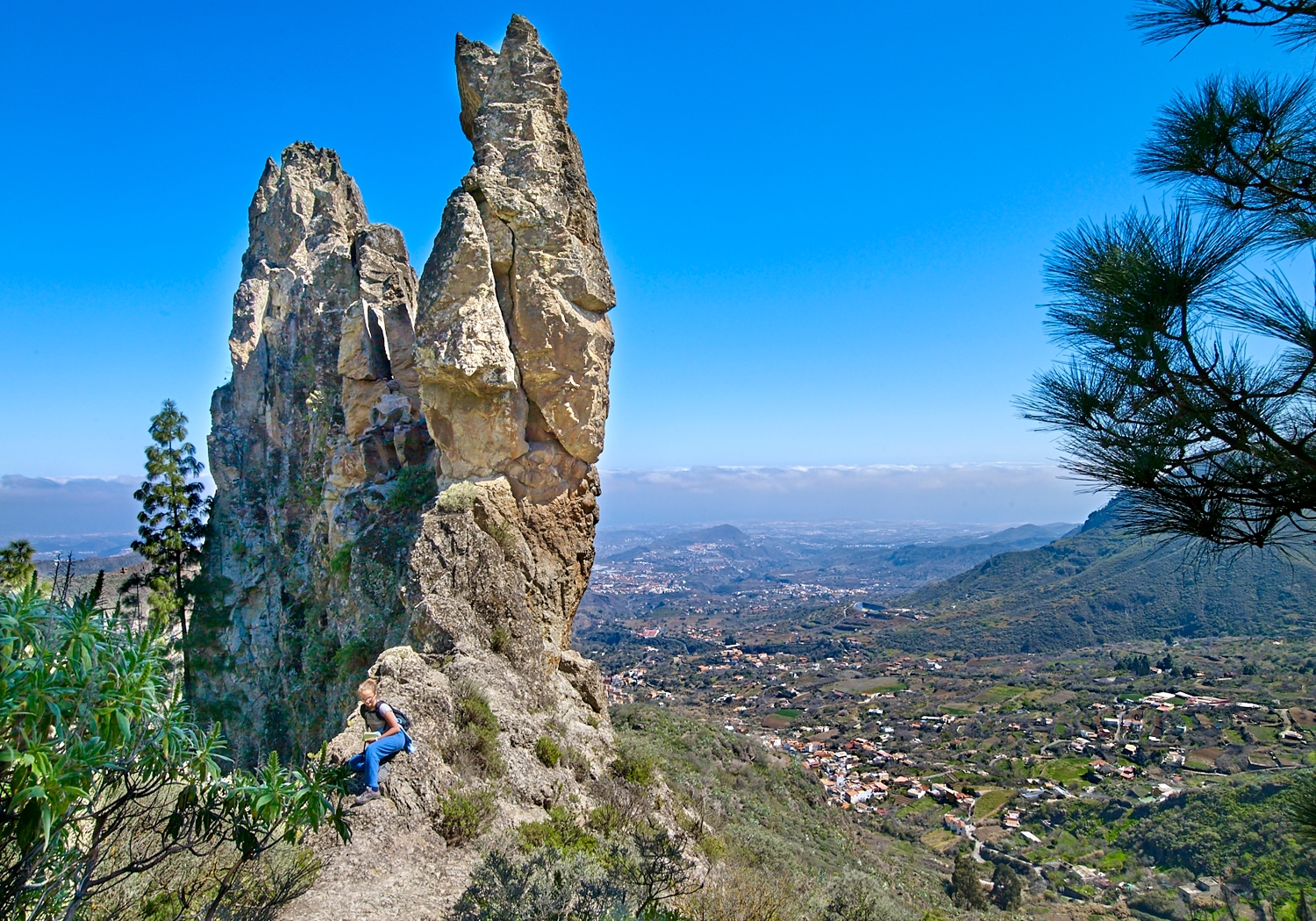
Above Tenteniguada lies the Caldera de Tenteniguada, a volcanic caldera with the largest concentration of tajinaste azul — Echium callithyrsum — in Canary IslandsThis species, endemic to Gran Canaria does not exist anywhere else in the world. It is also home to endangered species such as the woody flor de mayo. The Caldera de los Marteles, further up in the peaks, adds another volcanic area of great geological value with flora endemic to Macaronesia.
The historic centre and the Iglesia de San Miguel
The historic center of Valsequillo preserves the quiet atmosphere of a mid-altitude village. The Iglesia de San Miguel Arcángel, built between 1903 and 1918 on the site of an old cemetery, was declared a Cultural Heritage of Interest. Inside, a green Seville-porcelain baptismal font with carved eagles stands out, along with the sculpture of Saint Michael, the work of Canarian sculptor Luján Pérez, notable for being the only angel depicted with a dog at his feet.
In the Biblioteca Municipal Benito Pérez Galdós five 15th-century polychrome wood Flemish carvings of great artistic value are also preserved, from the old Oratorio de la Virgen de la Salud. In addition, the flea market held in the historic centre every Sunday brings together local producers with fruit, vegetables and craftwork from the municipality.
Strawberries and craftwork
Valsequillo is the largest producer of strawberries of Canary Islands. Its altitude, humidity and temperature conditions create an ideal microclimate for growing this fruit, which can be bought directly from local farms during the season. The municipality's craft tradition is equally notable: cane and rye basketry, ceramics, pottery, calados, crochet and wood carving are the most representative trades. There is also a significant number of artisan cheesemakers and honey producers who sell directly to the public at their premises.
Gastronomy in Valsequillo
Restaurants in Valsequillo offer mid-altitude Canarian cuisine with local produce. The grilled meats are the most sought-after dish: fried ribs, grilled chorizo sausages and blood sausages served with wrinkled potatoes with mojo. Vegetable stews, the scalded gofio and the municipality's fresh cheeses round out a gastronomic offering of great quality and affordable prices. For dessert, bienmesabe, leche frita and frangollo are the most common. Local winery wines — produced on mid-altitude vineyards — also accompany meals with a character very much of the island's interior.
How to get to Valsequillo
Valsequillo is in the centre-east of Gran Canaria, about 24 kilometres from Las Palmas de Gran Canaria (approximately 30-35 minutes by car) and only 11 kilometres from Telde. The most direct access from Las Palmas is via the GC-15 road to the GC-41. A private car is recommended for visiting the municipality's different districts and natural areas. Also check the map of the municipalities of Gran Canaria to help you navigate the island.
Frequently asked questions about Valsequillo Gran Canaria
What is the Barranco de los Cernícalos?
It is a ravine with water all year round in the municipality of Valsequillo, with one of the best wild-olive forests in Gran Canaria and high waterfalls. The main trail is about 7 kilometres long with low difficulty and is one of the most popular in the east of the island. It also holds historic mills and pre-Hispanic settlements.
What is the blue tajinaste of Valsequillo?
The tajinaste azul (Echium callithyrsum) is a plant endemic to Gran Canaria that grows only in this area. The Caldera de Tenteniguada, in the municipality of Valsequilloholds the largest concentration of this species in all of Canary Islands. It blooms in spring and is one of the island's most singular botanical spectacles.
When do the almond trees bloom in Valsequillo?
The almond trees of the Rincón de Tenteniguada bloom between January and FebruaryThe Fiesta del Almendro en Flor of Valsequillo is one of the most crowded in the interior of Gran Canaria and draws visitors from across the island to see the landscape in bloom.
Why is Valsequillo famous for strawberries?
The municipality is the largest producer of strawberries of Canary Islands. Its mid-altitude conditions of altitude, humidity and temperature create the perfect conditions for this crop. During the season they can be bought directly from local farms.
What is special about the San Miguel sculpture in Valsequillo's church?
The image of San Miguel Arcángel, the work of Canarian sculptor Luján Pérez, is the only angel known in Canary Islands depicted with a dog at his feet. The church also holds a Seville-porcelain baptismal font and five 15th-century Flemish carvings in the municipal library.
How do you get to Valsequillo from Las Palmas de Gran Canaria?
It's about 24 kilometres via the GC-15 and GC-41 roads, approximately 30-35 minutes by car. From Telde it's only 11 kilometres. A private car is recommended, as public transport in the area runs infrequently.