
What to see in Firgas, Gran Canaria
Spring water and the Paseo de Canarias
Firgas Gran Canaria, the balcony of the Atlantic and the water town
Firgas is one of the smallest and most charming municipalities in the north of Gran Canaria. It is situated about 500 meters above sea level, between green ravines and banana valleys, offering views of the Atlantic Ocean that have earned it the nickname of balcony of the Atlantic. Its history is linked to water from its origins: the municipality founded in 1488 constructed ditches, mills, and spas making use of the aquatic wealth of its ravines. Therefore, today water remains the most recognizable element of the town, literally sculpted in its streets in the form of waterfalls and mosaics. Also see the map of the municipalities of Gran Canaria to help you navigate the island.
The Gran Canaria Walkway and the Canarias Walkway
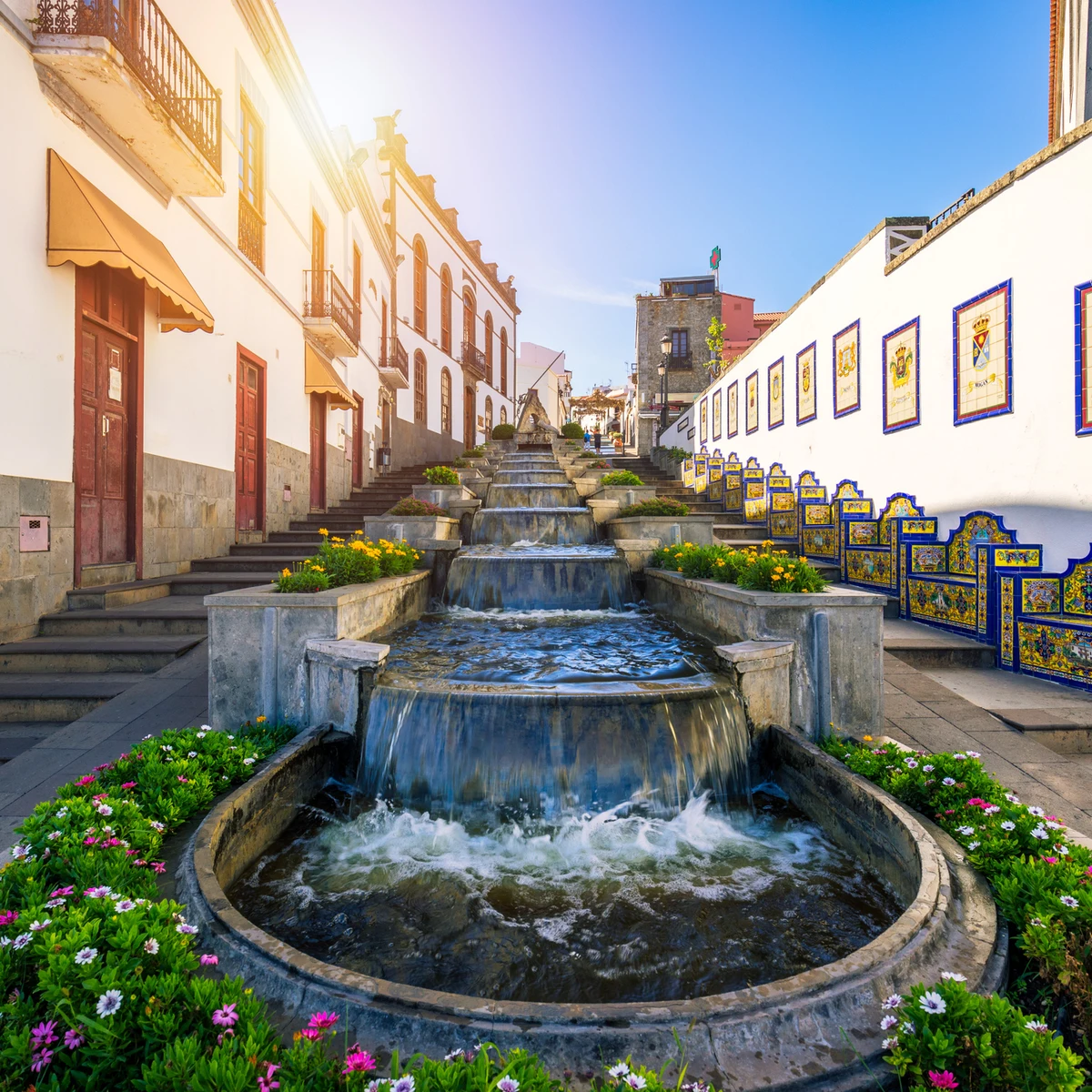
The Gran Canaria Walkway is the main attraction of the municipality and one of the most photographed images of the interior of the north of Gran Canaria. It occupies what was the old Real street of the Center and makes use of the natural slope of the terrain to create a 30-meter waterfall in stone through which water flows constantly. On the sides of the staircase, Sevillian tiles represent the 22 heraldic coats of arms of all the municipalities of Gran Canaria, along with the insular coat of arms. Walking through it is, in a way, touring the entire island in just a few minutes.
Just above, the Canarias Walkway follows the same spirit but with a different theme: the ground has the map of each of the seven main islands of the archipelago sculpted in relief, with their coats of arms and a representative landscape of each. Both walkways are freely accessible and are right in the town center, so there is no need to divert to see them.
The Conde Mill
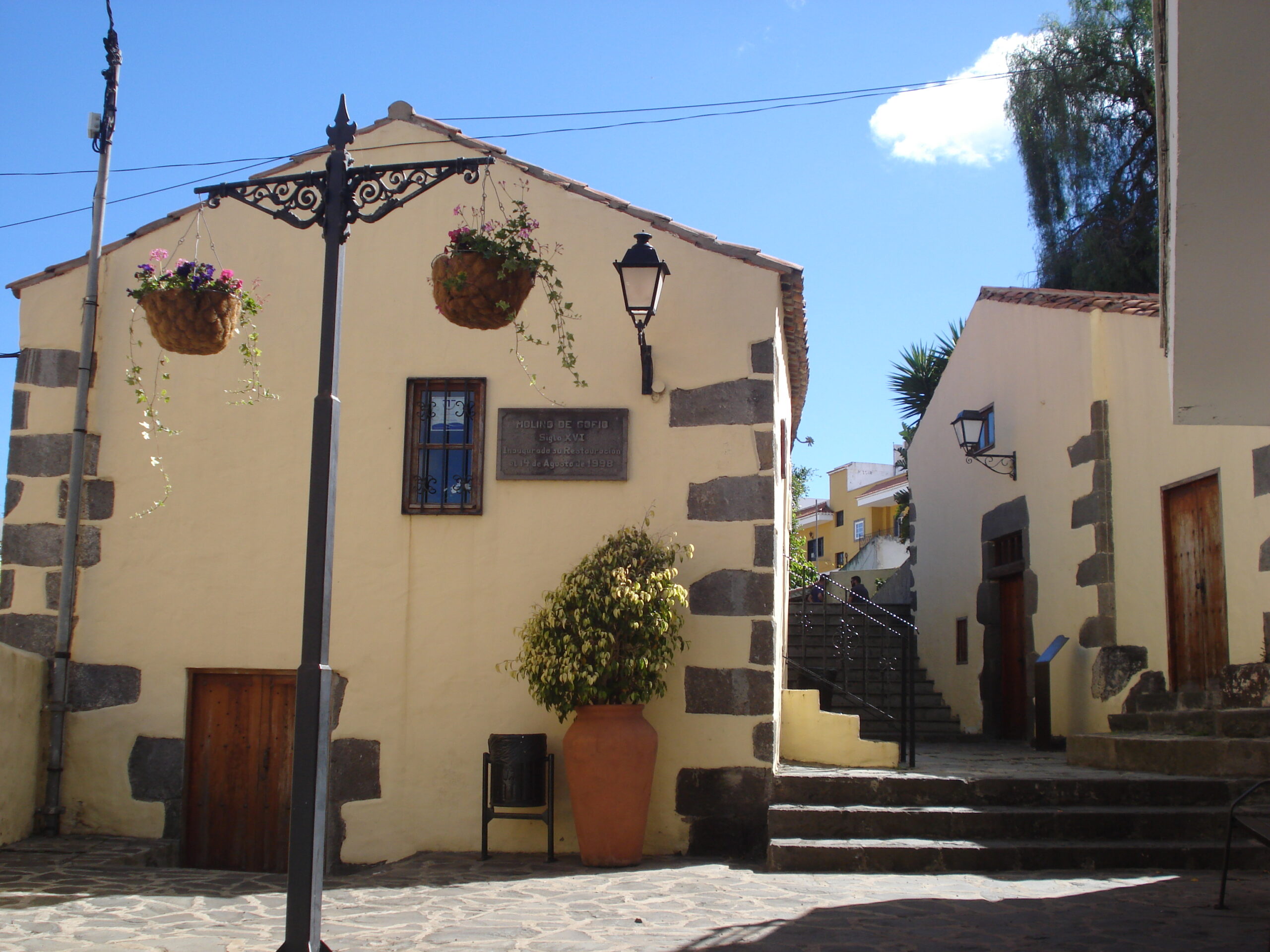
The Water Mill of Firgas — also called Conde Mill — is the oldest working water mill in Canary Islands. It was built in 1512, more than five centuries ago, on the waterway of the Heritage of Waters of Arucas and Firgas. Due to its historical value, it was declared Cultural Heritage of Interest and restored in 1998. Today it continues to operate and can be visited along with the old grain store, the roaster, and the miller's house. Visiting hours are until 14:30 in winter and until 13:30 in summer.
The mill complex is a very complete example of the traditional agricultural infrastructure of Gran Canaria and allows understanding how the production of gofio worked on the island for centuries.
The Azuaje Ravine
The Azuaje Ravine is the most important natural space in the municipality and one of the best-preserved ravines in the north of Gran CanariaDeclared a Natural Monument, housing one of the best examples of gallery forest on the island, with Canarian willows, dragos, and palm trees growing along the creek. Additionally, thermal springs flow from its waters that in the 19th century gave rise to a popular spa. The spa no longer exists, but the water continues to flow and the ravine's environment has great natural beauty.
The path that runs through the ravine is of low difficulty and allows you to walk among the riverside vegetation for about 40 minutes. It is therefore one of the calmest and most pleasant hiking routes in the north of Gran Canaria, especially in the hotter months.
The historic center
The center of Firgas is small and can be traversed on foot in no time. The Plaza de San Roque is the heart of the village, with the Church of San Roque founded in 1845, the City Council in neo-Canarian style from the 1940s and a viewpoint with direct views of the ocean and the northern coast of Gran Canaria. Next to the square stands the House of Culture, the most emblematic building of the municipality: built in 1870 as a hotel and inn for the clients of the Azuaje spa, it now houses the municipal library, an exhibition hall, and an auditorium.
Additionally, in the town center, you can see the Commemorative Fountain of the 500 years of the Foundation of Firgas, a stone monument that recalls the origins of the municipality in 1488.
Watercress and gastronomy
Firgas is known in Gran Canaria for the quality of its watercress. The gardens of the municipality — called Las Berreras — produce high-quality watercress that supplies markets and restaurants throughout the island. Therefore, the watercress stew is the most representative dish of local cuisine and appears in almost every restaurant in the municipality.
In addition to the stews, the restaurants and grills of Firgas are well known in the north of the island for their grilled meats. The Los Chorros Restaurant, the Marcos’ Corner — specialized in watercress — and Las Brasas are the most valued references by locals.

How to get to Firgas
Firgas is about 28 kilometers from Las Palmas de Gran Canaria via the GC-3 and GC-30 roads (approximately 35-40 minutes by car). The municipality does not have a direct access highway, so the road is winding. By public transport, the line 204 of Global connects Las Palmas with Firgas, although the journey takes more than an hour. It is recommended to have your own car to visit the ravine and the surroundings. Also see the map of the municipalities of Gran Canaria to help you navigate the island.
Frequently Asked Questions about Firgas Gran Canaria
What is the Gran Canaria Walkway in Firgas?
It is a pedestrian staircase with a 30-meter waterfall in stone through which water flows constantly. On the sides, Sevillian tiles represent the 22 coats of arms of all the municipalities of Gran Canaria. It is the most photographed point in the municipality and is in the town center.
What is the difference between the Gran Canaria Walkway and the Canarias Walkway?
The Gran Canaria Walkway has the waterfall and the coats of arms of the municipalities of the island. The Canarias Walkway, just above, has the seven islands of the archipelago sculpted in relief on the ground, with their coats of arms and representative landscapes. Both are on the same pedestrian path and are visited sequentially.
Can the Water Mill of Firgas be visited?
Yes. The Conde Mill, built in 1512 and the oldest in operation of Canary Islands, opens to the public until 14:30 in winter and until 13:30 in summer. The visit includes the working mill, the grain store, the roaster, and the miller's house.
What is the Azuaje Ravine?
It's a Natural Monument in the term of Firgas with one of the best gallery forests in the north of Gran Canaria: Canarian willows, dragos, and palm trees along the creek. It has thermal springs and a low-difficulty path of about 40 minutes. It is ideal for a quiet walk away from mass tourism.
Why is Firgas famous for watercress?
The gardens of Firgas — known as Las Berreras — produce high-quality watercress that supplies all of Gran Canaria. The watercress stew is the most representative dish of local cuisine and appears in almost every restaurant in the municipality.
How to get to Firgas from Las Palmas de Gran Canaria?
It is about 28 kilometers via the GC-3 and GC-30 roads, approximately 35-40 minutes by car. By bus, the line 204 line 204