
What to see in Fasnia, Tenerife
Southeast coast and foothills
Fasnia Tenerife, the volcanic balcony of the southeast
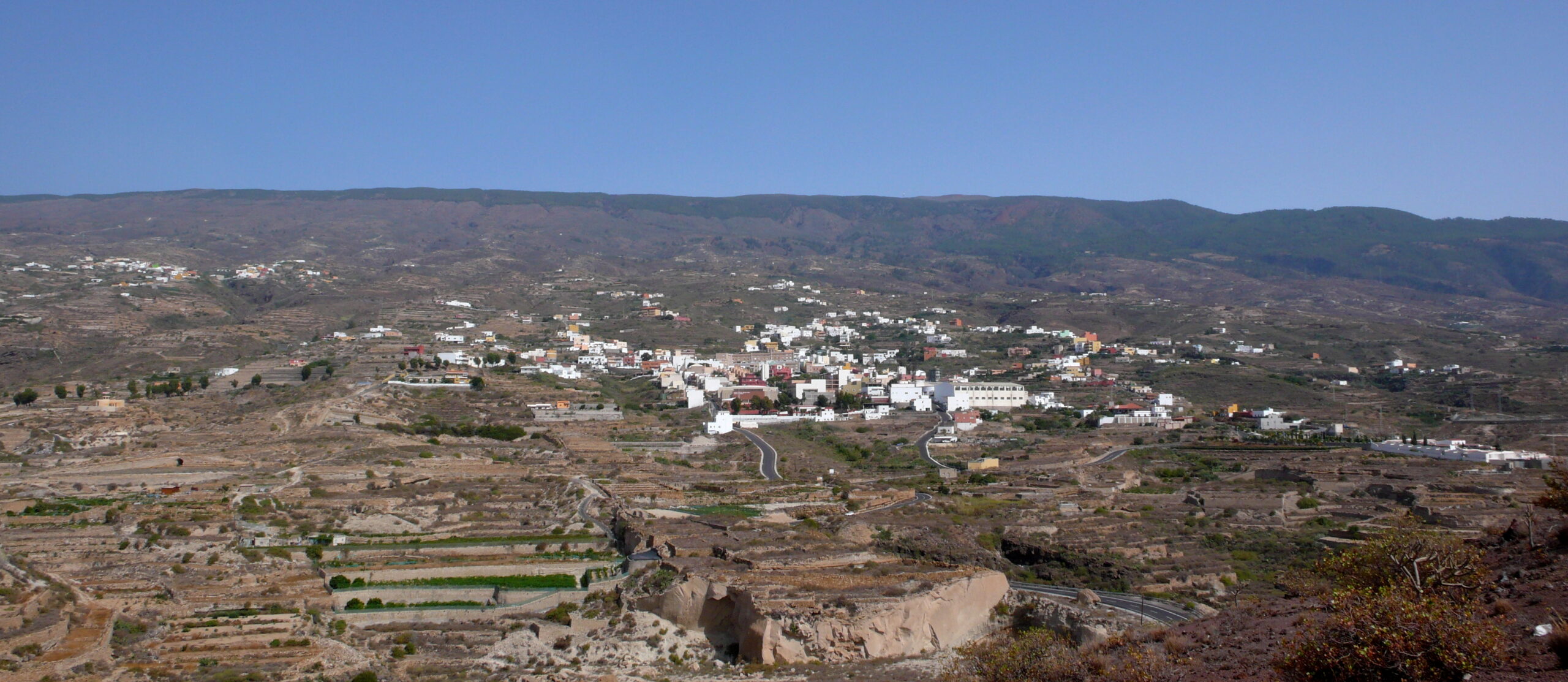
Fasnia is one of the quietest and least known municipalities in the southeast of Tenerife. Its territory descends from volcanic peaks over 2,000 meters above sea level to a coast of cliffs and natural pools beaten by the Atlantic. Moreover, its history is marked by the eruption of the Fasnia volcano in 1705, which left a landscape of lava and malpaís that still defines the character of the municipality. Thus, it is a destination for those seeking nature without crowds, historical heritage, and the Tenerife most authentic experiences in the southeast. You can check the live cameras in Tenerife to check the weather before visiting the area.
The Fasnia volcano and the volcanic landscape
The Fasnia volcano, also known as Montaña Negra, erupted in 1705 along a fracture that generated three volcanic structures of distinct shapes and sizes. The lava flow transformed the territory of the municipality and created the malpaís that can today be traversed by marked paths. It is also one of the best-preserved historical volcanoes in Tenerife, accessible from the higher areas of the municipality via the road leading to Izaña.
The volcanic landscape of Fasnia is not limited to the cone of the volcano. Across the municipality, deep ravines extend, volcanic rock walls of one hundred meters, and lava flows covered by native vegetation. Therefore, it is an area of great geological and botanical value.
The Old Church: the most emblematic monument
The Old Church of Fasnia, also known as ruins of the Chapel of San Joaquín, is the most representative monument of the municipality. This 16th-century chapel was destroyed by the lava flow from the eruption of 1705 and its ruins, declared Cultural Heritage of Interest, serve as a prime historical testament. The image of the volcanic stone walls emerging from the malpaís is one of the most characteristic and photogenic scenes in the southeast of Tenerife.
Alongside the ruins, remnants of the Camino Real, the ancient road connecting southern municipalities with the capital, are also preserved. Its route through terraces and malpaís is now a historically significant path.
The Barranco de Herques and hiking
The Barranco de Herques — also spelled Erques — is the natural boundary between Fasnia and the neighbouring municipality of Güímar and one of the most impressive ravines in the southeast of Tenerife. Its walls reach one hundred meters high, with layers of volcanic rock showing millions of years of Canarian geology. The path that traverses the ravine on foot is a highly valued moderate difficulty route for hikers, featuring native vegetation, ancient agricultural terraces, and views from the cliff top that provide perspective on the landscape scale.
From the municipality’s peaks, routes can also be made towards the Natural Park of the Corona Forestal, with Canary pine forests and paths connecting to neighboring municipalities.
The coast: cliffs, pools, and sunsets
The coast of Fasnia is not made up of sandy beaches, but volcanic cliffs, natural pools, and wild coves. The Playa de Los Roques is the most well-known bathing spot in the municipality, featuring unique volcanic formations and clear waters. At sunset, it is one of the best spots in the southeast of Tenerife to see the sun set over the ocean.
The Cliffs of Hondura, on the other hand, is a natural area of great ecological value. Its volcanic rock walls are home to halophytic vegetation, rocks, and caves excavated in the porous stone. Furthermore, it is a refuge and nesting area for numerous species of marine birds, migratory and resident, making it a point of ornithological interest in the southeast of the island.
Gastronomy in Fasnia
The gastronomy of Fasnia is honest Canarian inland cuisine, with local ingredients and unpretentious cooking. The bars and restaurants of the municipality serve wrinkled potatoes with mojo, gofio in various preparations, fresh seafood from the coast, grilled meats, and vegetable stews. Additionally, artisanal goat cheeses and mojos made with local products are common accompaniments at any table. The municipality's agricultural tradition, with crops on terraces between lava and fertile soil, is directly reflected in simple, seasonal cooking.

How to get to Fasnia
Fasnia is in the southeast of Tenerife, about 20-25 kilometers from the Tenerife South Airport via the TF-1 (approximately 25-30 minutes by car). From Santa Cruz de Tenerife the journey takes about 40-45 minutes along the same highway. By public transport, several TITSA bus lines connect Fasnia with other southeastern municipalities, although for visiting the coast and ravines it is advisable to have your own car. Also check the live cameras of Tenerife to orient yourself on the island.
Frequently asked questions about Fasnia Tenerife
What is the Old Church of Fasnia?
They are the ruins of the Chapel of San Joaquín, a 16th-century building destroyed by the lava flow from the eruption of Fasnia volcano in 1705. Declared Cultural Heritage of Interest, its volcanic stone walls emerge from the malpaís and are the most photogenic and representative monument of the municipality.
When did the Fasnia volcano erupt?
The Fasnia volcano, also called Montaña Negra, erupted in 1705. Along a fracture, three distinct volcanic cones formed. The lava flow transformed the municipality's landscape and destroyed the old chapel of San Joaquín. It is one of the best-preserved historical volcanoes in Tenerife.
Are there beaches in Fasnia?
The coast of Fasnia is made up of volcanic cliffs and natural pools, not sand. The best-known bathing spot is the Playa de Los Roques, featuring volcanic formations and clear waters. Additionally, the Cliffs of Hondura is an area of great natural and ornithological value.
What is the Barranco de Herques?
It is the large ravine that separates Fasnia of Güímar, with walls reaching up to one hundred meters high. The path that traverses it on foot is a highly valued moderate difficulty route, with spectacular views, native vegetation, and geologically interesting layers.
How to get to Fasnia from Tenerife South Airport?
It is about 20-25 kilometers via the TF-1, approximately 25-30 minutes by car. It is one of the closest municipalities to the southeast airport of Tenerife.
What hiking routes are there in Fasnia?
Notable are the trail through the Barranco de Herques, the walk along the Camino Real next to the ruins of the Old Church and the routes towards the Fasnia volcano from the higher areas. Additionally, from the municipality’s peaks, access is provided to the trails of the Natural Park of the Corona Forestal.