
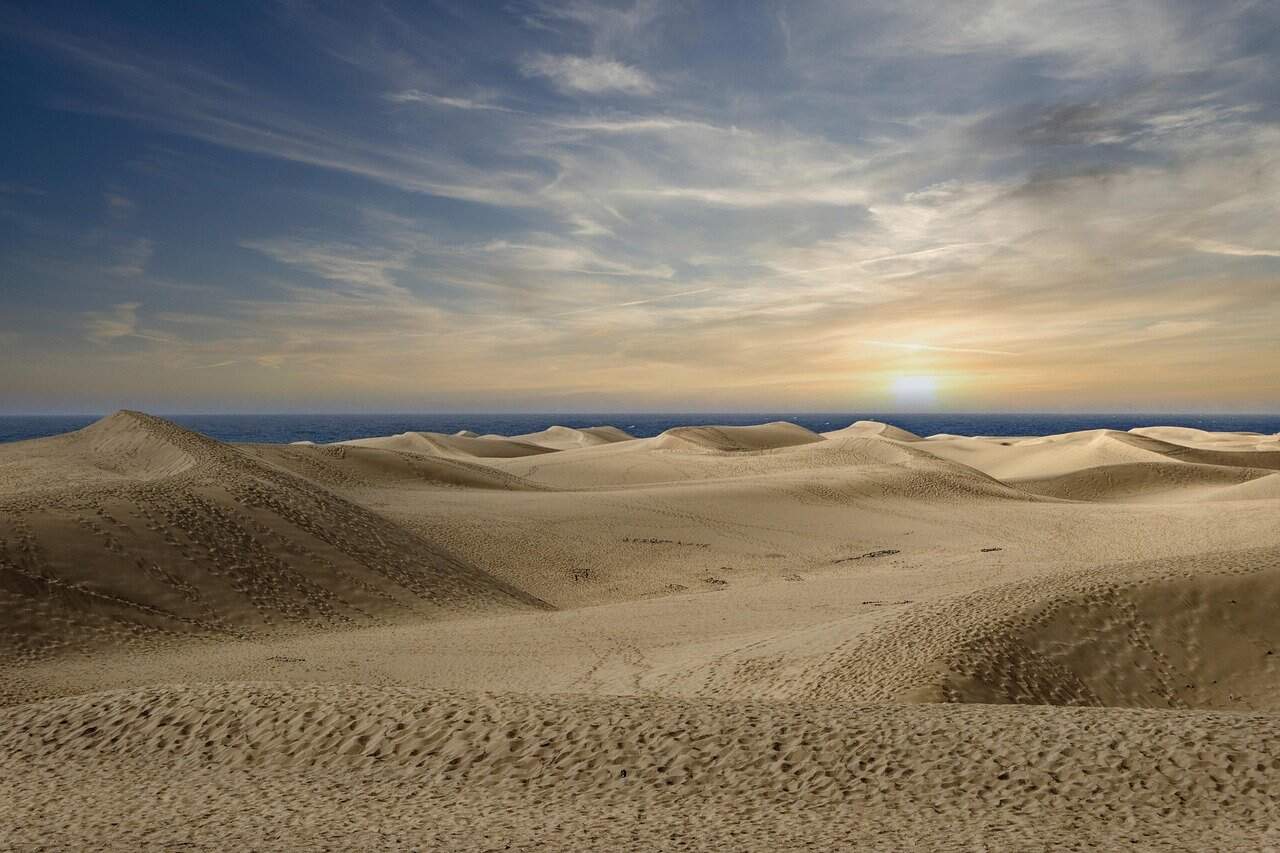
4 stagioni magiche in una destinazione unica: Gran Canaria
La cosa più bella di Gran Canaria è che ti costringe a guardare l’orologio con occhi diversi. Ti svegli sulla costa con il profumo del mare, a metà mattina percepisci la fresca umidità delle medianías, a mezzogiorno la sabbia del sud ti ricorda un’estate senza fine e, alla sera, l’aria che scende dalle vette ti invita ad allacciarti la giacca. In soli 50 chilometri, i colori, la luce e la temperatura cambiano: è come vivere le quattro stagioni in un solo giorno.
Perché Gran Canaria può offrire quattro stagioni
L'isola è quasi circolare e raggiunge i 1.949 metri in corrispondenza del Pico de las Nieves. Gli alisei di nord-est si scontrano con i versanti settentrionali, lasciando lì umidità e nuvole, per poi arrivare secchi a sud. Pertanto, nel giro di pochi chilometri, il clima cambia completamente:
- Nord (sopra vento): fresco, umido e verdeggiante, con il mare di nuvole che accarezza i pendii.
- Medianías: mild, with crops, almond trees, and traditional villages.
- Clima:bosco di pini, aria fredda e orizzonti limpidi; in alcuni inverni, persino la neve.
- Sud (sottovento): secco, caldo e soleggiato, con dune, spiagge e calette dalle acque tranquille.
Come regola generale, ogni 800 metri di dislivello la temperatura scende di 5-7 °C e, a causa degli alisei, il cielo può annuvolarsi nel giro di pochi minuti. È quindi consigliabile tenere sempre in auto un indumento pesante.
An itinerary to experience the four seasons
- Dawn, "spring": walk and coffee in front of the bar at Las Canteras, in Las Palmas de Gran Canaria. Just wear a t-shirt and a light jacket.
- Mid-morning, "autumn": a short trail through the laurisilva of the north, in the Barranco de Azuaje or in Los Tilos de Moya. Bring a light jacket and shoes with good grip.
- Noon, "summer": swimming and walking in the Dune di Maspalomas, with a hat, sunscreen, and water.
- Dusk, "winter": viewpoints of Pico de las Nieves or of Roque Nublo, above the sea of clouds. A windbreaker and a thermal layer are essential.
Routes worth a detour
- Green North: Las Palmas de Gran Canaria – Arucas – Firgas – Barranco de Azuaje – Agaete. Historical architecture, banana plantations, and viewpoints over the Atlantic.
- Golden South: Fataga – Degollada de las Yeguas – Maspalomas – Meloneras – Puerto de Mogán. Canyons, dunes, and the brightness of the south.
- Volcanic Summit: Tejeda – Roque Nublo – Pico de las Nieves – San Mateo. Inland villages and, on clear days, Teide on the horizon.
History: the ancient Canarians and Rome
Although classical authors spoke of the Fortunate Islands, Rome never conquered the Canary Islands. Archaeology has found sporadic Roman presence in the eastern islands, like the purple dye workshop on the islet of Lobos, off Fuerteventura, but there are no traces of Roman occupation in Gran Canaria.
Before the arrival of Castile in the 15th century, the island was inhabited by the ancient Canarians of North African origin, who at the time of conquest were organized into two guanartematos: Gáldar and Telde. They built fortified granaries like the Cenobio de Valerón and left places like Risco Caído, a World Heritage site since 2019, and the Cueva Pintada de Gáldar.
Heritage and flavors
In Las Palmas de Gran Canaria, the Museo Canario explains pre-Hispanic life, and the Vegueta neighborhood, with the Casa de Colón and the Cathedral of Santa Ana, tells the history of a city open to the Atlantic. In Guayadeque, the cave-houses and hermitages carved into the rock connect the present with ancestral ways of living.
On the table, the Guía flower cheese, the bienmesabe from Tejeda, the wrinkled potatoes with mojo, or the wines from the Gran Canaria Denomination of Origin complete the experience.
Natura per tutti i ritmi
- Escursionismo: Roque Nublo, Tamadaba, or Pilancones, among pine forests and volcanic rocks.
- Wind sports: Pozo Izquierdo and Vargas beach are world famous.
- Spiaggia urbana: Las Canteras, with its natural bar, is perfect for snorkeling and surfing.
- Protected spaces: nearly half of the island is protected, and much of it has been a Biosphere Reserve since 2005.
Gran Canaria live
The weather changes, and anyone who has had to adjust their plans on the fly knows that. With our webcam di Gran Canaria you can check the sea conditions at Las Canteras, the light in Maspalomas, the sea of clouds in Tejeda, or the wind in Pozo Izquierdo before heading out.